

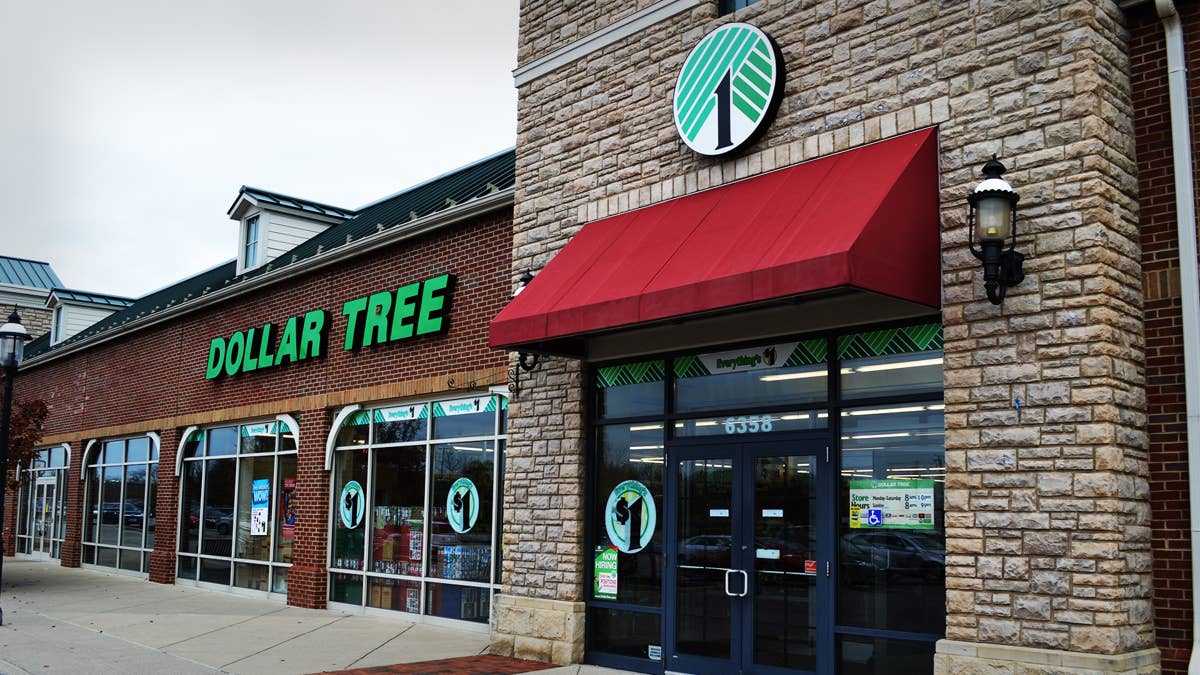
New Dollar Tree store feature sparks customer backlash
Maybe you’ve heard the joke about Dollar Tree. In my neck of the woods, people like to call it “No-Longer-a-Dollar Tree.”
There’s a reason for that.
Dollar Tree has spent the past few years transforming itself from a true single-price retailer into a chain with merchandise spanning multiple price points.
The strategy has helped the company broaden its assortment, bring in higher-quality products, and improve sales. But it’s also changed one of Dollar Tree’s defining characteristics.
It used to be that you could walk into a Dollar Tree and know exactly what each item would cost. Now, it’s a crapshoot.
The company’s management team has made clear that the shift is central to its long-term strategy.
During its first-quarter 2026 earnings call, Dollar Tree CEO Michael Creedon said the company is continuing to “expand and modernize our assortment through multi-price,” adding that the expanded assortment “continues to perform well and remains a meaningful growth driver.”
He also called the expansion “a key enabler” that allows Dollar Tree to improve quality and introduce products that wouldn’t have been possible under a single price point.
But while the multi-price strategy may be working financially, it’s creating a more complicated shopping experience for customers who have long associated the brand with simple, predictable pricing.
Dollar Tree customers grapple with new frustrations
Dollar Tree now carries products priced from its $1.25 opening price to as much as $10 in many locations.
And while the company says roughly 85% of its sales still come from products priced at $2 or less, higher-priced merchandise has become increasingly common throughout stores.
Related: Target wants rich parents to shop at its stores
That, combined with a lack of price tags in some stores, leaves customers wondering what they’re going to pay when they pick up an item to purchase.
While some Dollar Tree products are clearly marked, shoppers have increasingly complained on social media about inconsistent labels or difficulty identifying prices on merchandise throughout the store.
And for a chain built around value and convenience, it’s easy to see how uncertainty over pricing can quickly become a source of frustration.
To address the issue, Dollar Tree has begun installing price scanners in more stores, USAToday reported. The devices are designed to eliminate guesswork, allowing shoppers to scan items themselves before heading to the checkout.
The rollout, however, has sparked another round of debate online.
Many shoppers view the scanners as evidence that the retailer has drifted too far from its roots.
Some social media users questioned why a store called Dollar Tree now needs price scanners at all, arguing that the feature wouldn’t be necessary if pricing had remained simple.
Others, however, said the scanners are a helpful addition because they can at least help prevent surprises at the register.
Image source: Shutterstock
A brand caught between growth and identity
The backlash over price scanners highlights a broader challenge facing Dollar Tree as it continues reinventing itself.
From a business standpoint, the multi-price strategy gives the retailer more flexibility to offset rising costs and compete across more categories. Company executives have repeatedly emphasized that the strategy lets them offer higher-quality goods.
More Retail:
- 60-year-old retailer closes over 240 locations across 35 states
- Retail giant exits U.S. fashion after multi-million-dollar scandal
- 79-year-old fast-fashion retailer closes 128 stores
The problem is that Dollar Tree’s identity was built on simplicity. For decades, customers walked into stores expecting every item to cost essentially the same amount. That predictability became part of the brand’s appeal.
Today’s stores offer a wider selection than ever before, but they also require shoppers to pay closer attention to shelf tags and product labels.
The addition of price scanners may solve a practical problem. But it also serves as a visible reminder that the retailer has fundamentally changed.
As Dollar Tree continues expanding its multi-price assortment, it faces a delicate balancing act.
The multi-price strategy may strengthen sales. But if longtime customers begin to feel that the chain no longer delivers the straightforward bargain-hunting experience they remember, Dollar Tree risks alienating the loyal shoppers who helped build the brand in the first place.
As one customer told USA Today, “I to this day will not pay for anything in there over $2. It’s not because I can’t, it’s just because I think it’s greed.”