
Trust, Regulation and Technology Set to Lead London Prop…
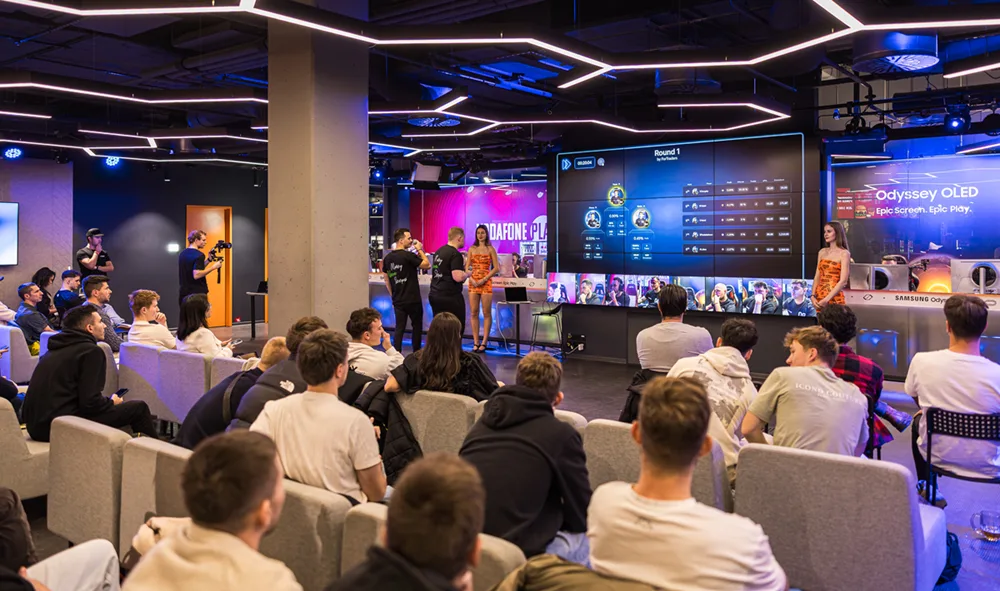
Trust, regulation, payouts and the technology underpinning funded trading will take centre stage at the London Prop Trading Expo when prop firms, infrastructure providers, payments companies and industry specialists gather at Old Billingsgate on October 23 and 24.
The two-day event is expected to bring together up to 4,000 trading professionals, with more than 64 speakers and 39 exhibitors currently scheduled across a programme combining panel discussions, trading education, live market activity and networking.
Among the main themes this year will be how the proprietary trading sector can build greater confidence among traders, whether regulation is likely to play a larger role in the industry’s development, and which technologies and operating models are best positioned to succeed over the next two years.
Trust and Reputation Take Centre Stage
One of the key Main Stage discussions, “Transparency, Trust & the Battle for Reputation,” will examine how prop firms can build and maintain confidence among traders through clearer rules, dependable payouts, stronger communication and more consistent operating standards.
The scheduled panel brings together participants from different parts of the funded-trading ecosystem, including Nora Bar of The5ers, Anastasiia Kaplunenko of OneFunded, Ruben Abitbol of RUBIK Prop Firm Consulting and Justin Hertzberg of FPFX Tech and PropAccount.
The discussion will be moderated by Nikolai Isayev, Chief Operating Officer of the Financial Commission, which recently expanded its work in the prop trading sector with the launch of a dedicated Prop Firm Certification framework.
The Financial Commission’s initiative introduces a voluntary set of standards covering areas including trading rules, payout policies, risk management, operational practices and dispute resolution.
Certified firms are subject to ongoing monitoring and annual renewal rather than receiving a one-time designation, according to the organisation. The framework also provides an external route for eligible disputes and creates procedures for assessing claims involving both traders and firms.
The panel has been assembled from different parts of the prop trading ecosystem, giving the discussion perspectives ranging from the running of funded-trader programmes to risk management and the infrastructure sitting behind them.
Nora Bar, Vice President of Business Operations at The5ers, brings the perspective of one of the longer-established names in the retail-funded trading market. The5ers says Bar has more than a decade of experience in fintech and online trading, with her current role covering areas including trader experience, access to capital and operational performance.
Anastasiia Kaplunenko, Co-Founder and CEO of OneFunded, represents a newer generation of prop-firm operators. OneFunded describes its model as being built around transparency, fairness and support, while Kaplunenko’s background includes senior growth and revenue roles before moving into the funded-trading industry.
Ruben Abitbol, Founder of RUBIK Prop Firm Consulting, approaches the subject primarily through risk.
Abitbol previously spent three years as Head of Risk and Trading at The5ers before working at PropFirmMatch and later launching RUBIK, which advises and operates risk-management functions for prop firms. His work covers trader behaviour, programme design, operational structures and the balance between payouts and sustainable risk management.
Completing the scheduled lineup is Justin Hertzberg, CEO of FPFX Tech and PropAccount.
Hertzberg brings the technology and infrastructure perspective. A former securities and commercial litigator who later moved into trading and brokerage, he founded FPFX Tech, which provides technology covering areas such as account creation, trader dashboards, CRM, payments, compliance workflows, analytics and risk monitoring for prop businesses. He also leads PropAccount, which provides infrastructure for firms launching proprietary trading brands.
Regulation Moves From Background Question to Main Stage
Trust will feed directly into another major theme at the Expo: whether retail prop trading is moving towards greater formal or self-regulatory oversight.
The topic will receive its own Main Stage discussion, “Will Prop Firms Be Regulated? Winners & Losers of the Next 24 Months,” currently scheduled for the afternoon of October 23.
The question matters because the retail-funded trading model occupies an unusual position between trading education, simulation, technology and financial services. Business structures vary significantly from firm to firm, and the regulatory consequences can depend on how accounts, execution and capital are actually structured.
That said, regulation is only one part of the industry’s next phase.
Immediately following the trust discussion, the Main Stage is scheduled to host “The Future of Prop Trading,” bringing together technology executives including Gold-i Founder and CEO Tom Higgins, Your Bourse Co-Founder and CEO Elina Pedersen and FPFX Tech’s Justin Hertzberg.
The combination gives the panel a strong market-infrastructure focus.
Gold-i provides liquidity connectivity and risk-management technology used by brokers, funds and prop firms, with its current offering spanning traditional FX infrastructure and digital-asset connectivity.
Your Bourse, meanwhile, provides execution, liquidity-management and real-time risk technology for FX and CFD businesses. Pedersen has led the company as CEO since 2025 after previously serving as its Chief Revenue Officer.
Together with Hertzberg, the panel is expected to consider which technologies and operating models are best positioned to survive over the next two years.
That conversation comes as prop firms increasingly have to make decisions about whether trading activity remains simulated, when and how profitable traders are moved towards live capital, how risk is internalised or externalised, what markets firms offer and how much of the underlying operating stack they build themselves.
Payouts and Platform Reliability Get Their Own Panel
Day two will take the discussion further down the operational stack.
The agenda currently lists a “Payouts, Payments & Platform Reliability” panel for 3:00 p.m., featuring Paytiko CEO Razi Salih, Worthy Payments’ Jeremiah Worthy and Fibonatix’s Chris Algie.
Payments have become particularly important for prop businesses because firms can operate internationally while serving traders using a wide range of payment methods. Deposits, evaluation purchases, refunds and trader payouts can therefore depend on multiple banks, payment service providers and payment rails.
Salih is expected to discuss that challenge from the payment-orchestration side. Paytiko says its system allows businesses to manage multiple payment providers, routing and transaction operations through a central layer, an approach it argues can help prop firms manage deposits and withdrawals across different markets.
Fibonatix’s Algie adds the perspective of a payment provider working with higher-risk and specialist merchants. He currently serves as Head of Sales at the company and has spent several years in the payments industry.
The panel ties directly back to the broader reputation debate. A prop firm’s relationship with its traders can deteriorate quickly if payouts are delayed, payment options repeatedly fail or technology makes it difficult to understand where a withdrawal stands.
Prop Trading Expo Brings the Different Parts of the Industry Together
The discussions form part of a broader London Prop Trading Expo programme expected to attract up to 4,000 attendees across the two days.
The organisers currently list 39 exhibitors spanning prop firms, trading technology, payments, analytics, education and professional services. Finotive Funding is headline sponsor, while Confirmo is listed as exclusive crypto payments sponsor. Other participating sponsors include WealthCharts, FXIFY, PropAccount, Hantec Trader, Tradeify, BlackArrow, IC Funded, Worthy Payments, OneFunded, Tickblaze and TradeDay.
For the prop industry, however, some of the most important conversations may take place on the Main Stage.
Retail prop trading has grown rapidly by making larger notional account sizes accessible to traders without requiring them to deposit equivalent personal capital. But growth has also exposed weaknesses around unclear rules, sudden operational changes, disputed payouts and the reliability of some firms.
The panels in London will therefore be debating more than what the next funded-account product should look like.
They will be addressing a more fundamental question: as prop trading matures from a fast-growing online niche into a more established financial-services ecosystem, what will firms have to do to earn — and retain — the trust of their traders?