

Intel Foundry Passes 1 Million High-NA Wafers as Buyers Wait
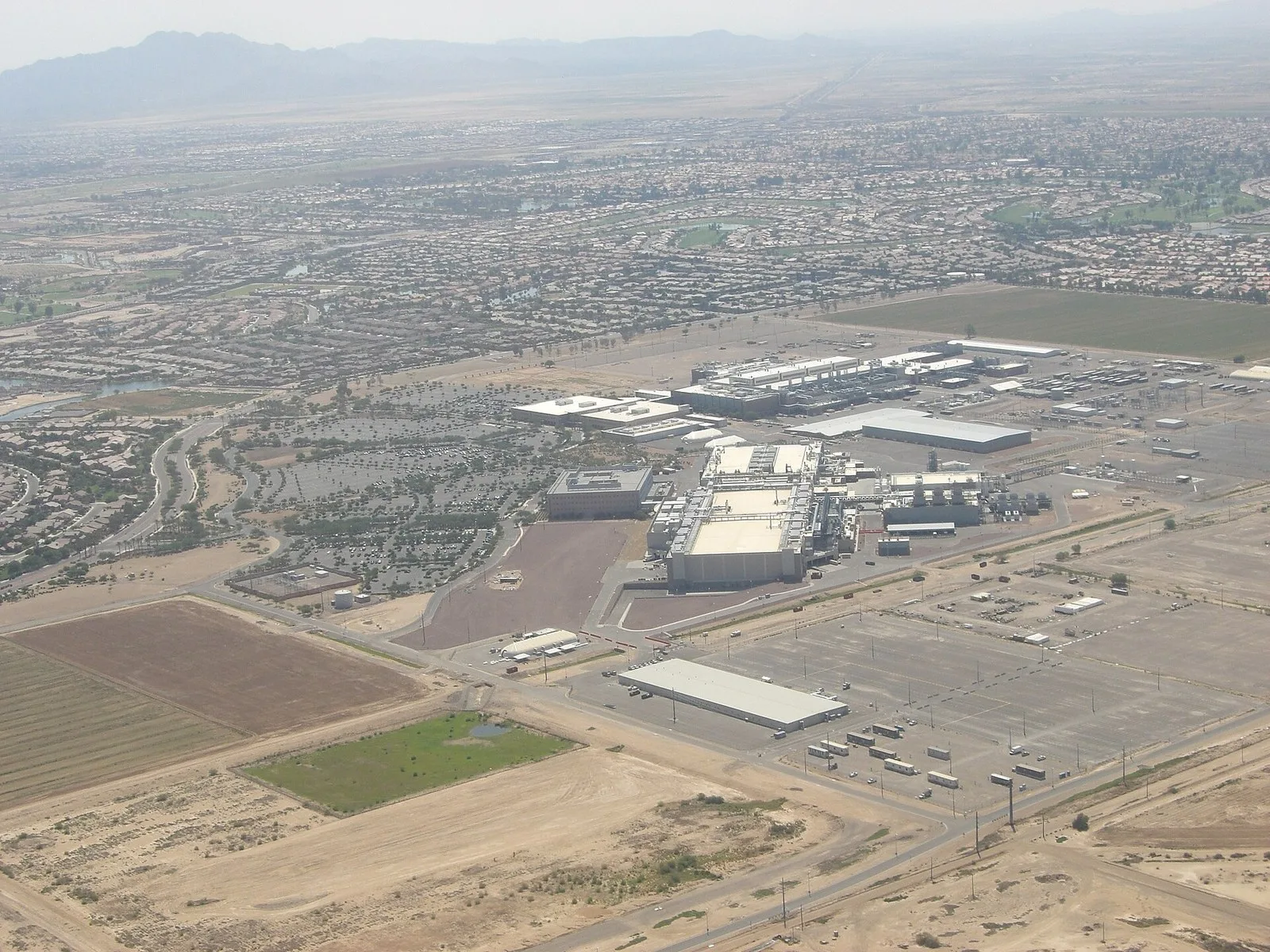
Intel Foundry told the industry on 8 September that it has now pushed more than one million wafers through High Numerical Aperture EUV lithography, with volume production running on select layers of the Core Ultra Series 3 processors code-named Panther Lake, according to a joint statement with ASML. The consensus reading is that the government-backed turnaround is working and that external customers will follow. The number that complicates it sits in Intel’s own quarterly filing: external foundry revenue of $293 million in the second quarter of 2026, on a segment that lost $2.1 billion in the same three months. The most advanced lithography estate on American soil is, commercially, still almost entirely a captive supplier to its own parent.
Here is the part that the celebration and the scepticism both skip. Washington is not only Intel’s largest single shareholder; it is also the buyer of the strategic argument that justifies the foundry. That double role means the 18A and 14A customer story cannot be marked to a normal commercial bar, and it produces a strange accounting result: because the escrowed portion of the government’s stake is carried as a derivative liability, Intel booked a $12.5 billion loss in Q2 2026 precisely because its own share price went up. The taxpayer’s paper gain and the company’s reported loss are the same movement seen from opposite sides of one contract. Every note celebrating the government’s profit is describing a line item that helped turn Intel’s first real operating profit in years into an $11.0 billion net loss.
Key facts
- More than one million wafers processed with High NA EUV at Intel Foundry, including volume production on select Panther Lake layers. Source: Intel and ASML joint release, 8 September 2026.
- Intel Foundry external revenue was $293 million in Q2 2026, up $271 million year on year, “primarily due to Altera’s transition to an external customer”. Source: Intel Form 10-Q, filed 24 July 2026.
- The segment carried a $2,089 million operating loss on $5,765 million of revenue, a negative 36% operating margin. Source: Intel Form 10-Q, 24 July 2026.
- Commerce agreed to take up to 433,323,000 shares for $8,869,800,000 of disbursements, split into a 274,583,000-share tranche at $20.74 and a 158,740,000-share escrow at $20.00. Source: Intel Form 8-K, filed 25 August 2025.
- Intel recognised a $12.5 billion loss in Q2 2026 on the escrowed shares, “driven by an increase in our stock price”, lifting the related derivative liability to $15.6 billion from $2.7 billion at 27 December 2025. Source: Intel Form 10-Q, 24 July 2026.
- Intel sold 210,526,315 shares at $95.00 on 10 August 2026 and underwriters took a 31,578,947-share option in full the next day, about $23.0 billion gross. Source: Intel Form 8-K, filed 12 August 2026.
- INTC closed at $108.60 on 18 September 2026, 4:00pm EDT, against a 52-week range of $28.73 to $142.35. Source: stockanalysis.com.
What Intel actually disclosed, and what it did not
The 8 September statement is a lithography milestone, not a customer announcement. Intel Foundry and ASML said High NA “continues to be used in high-volume manufacturing production at Intel Foundry today”, with the million-wafer figure spanning early tool certification, testing, research and development, and volume production on select layers for a subset of Panther Lake parts. They also said products built on Intel 18A using High NA for select layers “continue to deliver performance that meets or exceeds comparable layers patterned using the NXE platform”.
“Intel Foundry has been one of the key leaders of the industry’s adoption of High NA, from installing the first commercial EXE system in 2024, to qualifying the latest generation of tools, to shipping the first high-volume logic product manufactured with High NA,” said Christophe Fouquet, president and chief executive of ASML. “The companies building the increasingly complex AI products of the future need manufacturing innovations that are production-ready and easy to use,” said Naga Chandrasekaran, Intel executive vice president and co-general manager of Intel Foundry, pointing to stitching techniques that let designers use High NA with today’s 6-inch masks.
Neither executive named an external customer. Neither mentioned 14A. Intel’s own 10-Q is equally careful: it records that “at the start of 2026, we released our first products manufactured on Intel 18A … in high volume production”, that the derivative node 18A-P “entered into risk production” in June 2026, and that on 14A the company has “made continued progress towards meeting performance and design milestones for potential significant customers to evaluate Intel 14A for their future products”. Evaluate. Not commit.
The customer ledger: committed, engaged, and merely reported
Separating those three buckets is the whole exercise, and almost nobody does it in print. Intel itself is blunt about where it stands: “At present, substantially all of our Intel Foundry business supports internal manufacturing for Intel Products; however, we are offering our Intel Foundry services to external customers and aim to develop a more significant external foundry business in the future.”
Contractually committed and named by Intel. One. Intel’s second-quarter results release of 23 July 2026 discloses a “strategic collaboration with Fortinet to develop Fortinet Security Processor 6 using Intel’s advanced design, packaging and manufacturing capabilities”. That is a real, named, company-disclosed external engagement. It is also a security-processor programme, not a leading-edge logic tenancy at the scale that changes a foundry’s economics.
Engaged, per management. Chief financial officer Dave Zinsner gave the most forward-leaning public framing yet at a Deutsche Bank investor conference. “The engagements with customers externally from a foundry perspective have significantly increased,” he said, adding that conversations had shifted from technical assessment to supply: “They’re moving away from just looking at data to thinking about, well, how much capacity can I get? What does that supply look like?” He said Intel had reached “conviction” on securing 14A external customers without announcing one, as reported by Bits&Chips on 2 September 2026. The same report puts 14A risk production in 2027 and high-volume manufacturing in 2028.
Press-reported only. The Apple and Google storyline that circulates in most Intel coverage traces to a single chain. TrendForce reported on 29 April 2026, citing Taiwan’s Commercial Times, that Apple’s M-series chips were evaluating 18A-P and that Google’s TPU v8e could use Intel’s EMIB advanced packaging. That is a supply-chain report relayed by a second outlet, now nearly five months old, and Intel has not confirmed it in any filing or release since. Separately, The Korea Herald reported on 16 September 2026, citing Reuters, that SK hynix is in exploratory talks with Intel about US memory production, possibly by leasing part of the delayed Ohio site. The report describes exploratory talks; Intel declined to comment.
Having read every Intel 8-K filed since the Commerce agreement closed, the pattern is consistent: Intel discloses process milestones promptly and customer commitments almost never, because there are almost none to disclose. The gap between engaged and committed is the entire foundry thesis, and it is being priced as though it has already closed.
Market data: a stock that ran, then gave a fifth of it back
INTC closed at $108.60 on Friday 18 September 2026 at 4:00pm EDT, with a $109.07 after-hours print at 7:59pm; the analysis below anchors on the regular-session close. That is up roughly 176% from the $39.38 close on 2 January 2026 and about 255% over twelve months, but it is also 22.9% below the highest close in the series, $140.94 on 22 June 2026. The shape matters: the June peak came before Intel priced $20 billion of new stock at $95.00, and the stock has spent the ten weeks since rebuilding toward that offering price rather than away from it.
Set the segment against itself and the scale problem is plain.
| Intel Foundry | Q2 2026 | Q2 2025 |
|---|---|---|
| Segment revenue | $5,765m | $4,417m |
| of which intersegment | ~$5,500m | ~$4,400m |
| of which external | $293m | $22m |
| Operating loss | $(2,089)m | $(3,168)m |
| Operating margin | (36)% | (72)% |
| Consolidated net revenue | $16,128m | $12,859m |
| Consolidated operating income | $1,796m | $(3,176)m |
Source: Intel Form 10-Q for the quarter ended 27 June 2026. The Q2 2025 external figure is derived from the filing’s statement that external revenue rose $271 million year on year.
The loss narrowed by $1.1 billion, and consolidated operating income swung positive for the first time in this cycle, as FinanceFeeds covered at the time. Both are real. But 95% of what the foundry made in the quarter it sold to itself, and most of the growth in the external line came from Altera, a business Intel used to own outright and now holds 49% of.
The accounting mirror: Washington’s gain is Intel’s loss
Now the derivation the blogs skip. The Commerce agreement covers up to 433,323,000 shares against $8,869,800,000 of disbursements, a blended cost of $8,869,800,000 ÷ 433,323,000 = $20.4693 per share, the $20.47 figure Intel’s own announcement of 22 August 2025 quoted. Marked at Friday’s $108.60 close, the full package is worth 433,323,000 × $108.60 = $47.06 billion, a paper gain of $38.19 billion and 5.31 times the money.
Two corrections to the headline version of that number. First, not all 433.3 million shares are out. The 10-Q states that 143 million escrowed shares had not been released as of 27 June 2026, leaving roughly 290.3 million actually in Commerce’s hands, worth about $31.5 billion at Friday’s close. Second, the stake is no longer 9.9%. Intel reported 5,044 million shares outstanding as of 17 July 2026 and then issued 242,105,262 more in the August sale. Against an implied 5,286 million shares, the full package is 8.20% and the issued portion about 5.5%. Dilution has quietly shrunk the taxpayer’s slice by roughly a sixth.
The mirror image is the liability. Intel does not publish its valuation model, but the carried figure lines up closely with the escrowed shares valued at the quarter-end price less the $20.00 per share Intel receives on release: 143 million × ($128.32 − $20.00) = $15.5 billion, against the $15.6 billion disclosed. Apply the same arithmetic to Friday’s $108.60 and the liability falls to roughly $12.7 billion. If the price holds into quarter end and no escrow releases intervene, the line that produced a $12.5 billion charge in Q2 should produce a gain of roughly $2.9 billion in Q3. Intel’s GAAP result is now partly a function of its own share price, in the wrong direction, and most models have not been rebuilt for that.
There is a third instrument almost nobody prices: a warrant over 240,516,150 shares at $20.00, exercisable only if Intel ceases to own at least 51% of its foundry business, expiring five years after closing. Intel excludes it from diluted share counts because it is “neither currently nor expected to become exercisable”. That warrant is the government’s anti-spin-off lock. Any structure putting Intel Foundry into a separate majority-owned vehicle triggers a claim worth roughly $9.5 billion at Friday’s price above strike. The most commonly proposed fix for Intel’s capital problem carries that price tag.
The political asset that becomes a political liability
A taxpayer position up tens of billions is an excellent thing to point at. It is also a constraint. FinanceFeeds reported on 9 September that a DigiTimes account, citing semiconductor supply-chain sources, put a further 5% to 10% headcount reduction on the table, against the 82,300 employees Intel disclosed at the end of June. Intel has confirmed neither the cut nor its timing. But the collision is easy to see: the administration that bought the stock did so on a domestic-manufacturing-jobs argument, and the company’s path to foundry profitability runs through fewer people and tighter capital.
“Intel is excited to welcome the United States of America as a shareholder, helping to create the most advanced chips in the world,” said Howard Lutnick, United States Secretary of Commerce, when the deal was announced. Chief executive Lip-Bu Tan’s framing at the July results was narrower and more operational: “AI is driving unprecedented demand for compute, and as we continue to execute, Intel is well-positioned to capture sustainable growth across our CPU franchise, ASICs, advanced packaging and vast wafer foundry network,” he said on 23 July 2026.
The legal overhang is real too. Intel’s 10-Q discloses a stockholder derivative suit filed in the Delaware Court of Chancery in March 2026 against its directors, the Department of Commerce and Secretary Lutnick, alleging the directors breached fiduciary duties in approving the agreement and that the agreement was unlawful. The plaintiff seeks invalidation. Commerce removed the case to the US District Court for the District of Delaware in April 2026, and defendants moved to dismiss in May. A ruling on those motions is the most underpriced binary on the register.
The call: three ways the foundry thesis resolves
Spot is $108.60 as of 18 September 2026, 4:00pm EDT. The levels below bracket it and are analytical reference points, not targets.
Base case: the ledger stays where it is (55%)
Through to the Q3 2026 results, estimated at 22 October 2026 but not confirmed by Intel, no named leading-edge external customer is announced. Management repeats the “conviction” language, capacity conversations continue, and external revenue stays in the low hundreds of millions. The escrow liability shrinks and delivers a non-cash gain that flatters GAAP without changing cash flow. Shares hold a range around $112, 3.1% above spot. The trigger that confirms it: a Q3 release that discloses 14A progress in milestone language rather than in customer names.
Upside: a named leading-edge tenant (25%)
Intel converts one of the evaluating accounts into a disclosed 14A or 18A-P commitment before the end of Q1 2027, with a filing or release that names the customer. That single event reprices the segment from a subsidised cost centre to a business with a second revenue leg, and a retest of the 22 June 2026 highest close becomes plausible. $138 is 27.1% above spot. Trigger: an 8-K or release naming an external logic customer, or a 14A yield and PDK disclosure specific enough for customers to commit against.
Downside: the gap gets re-marked (20%)
The customer conversations stay conversations into 2027, capital intensity keeps rising as Intel pre-orders equipment for a 2028 ramp, and the market re-rates the foundry toward what it earns rather than what it might. $87 is 19.9% below spot and sits on the August 2026 low close of $87.26, the level reached after the $95.00 offering. Trigger: a 14A schedule slip, a capex guide that outruns disclosed demand, or an adverse ruling that revives litigation risk over the Commerce agreement.
Invalidation. This framework breaks if Intel names a top-ten fabless customer with volume committed on 14A before the Q3 release. That would mean the committed bucket had already closed while the filings still described evaluation, and the base case would be wrong on its central assumption rather than merely early.
What would change my mind. Three things. An external foundry revenue print above roughly $500 million in a single quarter not attributable to Altera. A disclosed 14A wafer agreement with take-or-pay economics. Or a dismissal of the Delaware challenge with prejudice, removing the tail risk that the capital structure is unwound by a court. Any one would move weight from the base case to the upside case. The Nvidia holding in Intel is worth watching as a sentiment tell, but it is a financial position, not a wafer commitment.
FAQ
Is Intel 18A actually in high-volume production?
Yes, by Intel’s own account. The 10-Q for the quarter ended 27 June 2026 states that Intel released its first products manufactured on Intel 18A in high volume production at the start of 2026, and the 8 September statement with ASML confirms volume production on select High NA layers for a subset of Panther Lake processors. The derivative node, 18A-P, entered risk production in June 2026.
How much did the US government pay for its Intel stake?
Commerce agreed to take up to 433,323,000 shares for $8,869,800,000 of disbursements, made up of $5,695,000,000 of accelerated CHIPS Act grant money and $3,174,800,000 under the Secure Enclave programme. That works out at a blended $20.4693 per share across a $20.74 tranche and a $20.00 escrow tranche, per the 8-K filed 25 August 2025.
Why did Intel report an $11 billion loss in a quarter it made money?
Because the escrowed government shares are carried as a derivative liability remeasured each quarter. A rising share price makes that liability larger, and the increase runs through the income statement. Intel recognised a $12.5 billion loss on the line in Q2 2026, which turned $1,796 million of operating income into a net loss attributable to Intel of $11.0 billion.
Has Apple or Google committed to Intel Foundry?
Not in any Intel disclosure. TrendForce reported on 29 April 2026, citing Taiwan’s Commercial Times, that Apple was evaluating 18A-P and Google was looking at EMIB packaging. That remains a second-hand supply-chain report. The only named external engagement in Intel’s own materials is the Fortinet security-processor collaboration disclosed with the Q2 2026 results.
What is the government warrant and why does it matter?
Commerce holds warrants over 240,516,150 shares at $20.00 that become exercisable only if Intel stops owning at least 51% of its foundry business, expiring five years after the August 2025 closing. It is effectively a penalty on spinning the foundry out. Intel excludes the warrant shares from diluted share counts because it does not expect them to become exercisable.
This article is news analysis and is not investment advice. The scenario levels described are analytical reference points derived from disclosed filings and live market data, not recommendations or price targets. Semiconductor equities are volatile and capital is at risk. Figures are as of 18 September 2026 unless otherwise stated; verify against the primary filings linked above.