

Xi Reaches the White House on 24 September as Huang and…
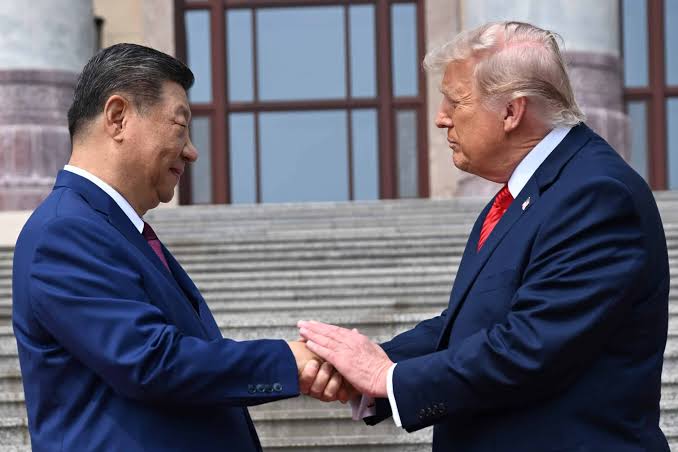
Chinese President Xi Jinping will visit the United States from 23 to 25 September at the invitation of President Donald Trump, according to an announcement from China’s Foreign Ministry. The White House meeting is scheduled for 24 September and will be Xi’s first visit there since 2015, with markets focused on tariffs, chip controls and rare-earth supply rather than ceremony alone.
Nvidia Chief Executive Jensen Huang and OpenAI Chief Executive Sam Altman are expected at the White House state dinner, according to Reuters. They are dinner guests, not members of Xi’s Chinese delegation, a distinction that matters when reading the event as a signal about technology policy.
The Visit, Format and Guest List
Trump plans to greet Xi at Joint Base Andrews before a formal White House arrival, a military review and the state dinner. Reuters reported that the dinner guest list also includes Amazon founder Jeff Bezos, Google Chief Executive Sundar Pichai, Apple Chief Executive Tim Cook, Tesla Chief Executive Elon Musk and Dell Chief Executive Michael Dell.
The leaders are meeting for the second time in six months after Trump’s state visit to China in May. A White House fact sheet on the May agreements said Xi had accepted the invitation for a return visit in the fall.
Trade, Taiwan, AI, Iran, Rare Earths and Fentanyl
The agenda is broad even if a trade-truce extension produces the most immediate market reaction. Reuters said the leaders are expected to discuss trade, Taiwan, artificial intelligence, Iran, rare earths and fentanyl, with each issue connected to either supply chains or risk appetite.
The current tariff exclusions are scheduled to run through 10 November under a White House order implementing the earlier arrangement. A further extension would reduce near-term escalation risk, while any lapse could revive the tariff volatility that previously drove sharp moves across equities and digital assets, including the Ether selloff during the 2025 tariff shock.
China enters the talks with strong export momentum. The General Administration of Customs’ August trade tables showed exports rising 25 percent from a year earlier and imports increasing 28.2 percent, with a monthly surplus of $119.09 billion. That pace leaves China on course for a second consecutive annual goods surplus of roughly $1 trillion.
Rare earths offer a more immediate physical-market test. Chinese shipments of rare-earth magnets to the United States fell in August, while Washington argues that supply has not fully normalized under the existing truce. The issue reaches beyond mining shares, although FinanceFeeds’ MP Materials scenario analysis shows how policy support and Chinese supply risk feed directly into valuations.
The Tech Delegation and What Chipmakers Want
US technology executives want predictability on access to China, export licences and the rules governing advanced chips. China wants relief from technology restrictions, while US officials want dependable access to critical minerals and safeguards around the most capable artificial intelligence systems.
Huang’s attendance is especially relevant because Nvidia sits at the center of the export-control debate. His view that China already has substantial computing capacity complicates the argument that restrictions alone can halt Chinese artificial intelligence development.
The company is also expanding its developer reach through the transaction covered in FinanceFeeds’ review of the Nvidia and Hugging Face regulatory filing. That deal’s China risk disclosure shows why summit language on open models, export rules and market access can affect technology valuations even without an immediate rule change.
Altman’s attendance puts frontier-model governance at the same dinner, but the guest list should not be treated as proof of a negotiated technology package. The United States and China have separately discussed artificial intelligence safety, while commercial access and national-security controls remain contested.
Managed Trade Outcome or Breakdown
A managed outcome could include another truce extension, selected Chinese purchases of US aircraft and agricultural goods, steadier rare-earth licensing and continued dialogue on artificial intelligence. That would lower near-term policy risk without requiring either side to resolve structural disputes over subsidies, Taiwan or advanced semiconductors.
It could also help financial firms planning China expansion. FinanceFeeds reported that Citi was seeking approval for a wholly owned China brokerage, an example of how bilateral stability can matter for licensing and investment decisions beyond goods trade.
A breakdown would raise the probability of renewed tariffs, tighter chip rules and retaliatory limits on critical minerals. The first reaction would likely appear in semiconductor shares, industrial companies dependent on magnets, the Chinese currency and commodity-linked markets, while prolonged escalation would affect capital spending and inflation expectations.
Neither path is guaranteed. The existing truce has survived repeated friction, and FinanceFeeds’ earlier review of commodities under shifting trade tension shows how quickly rare-earth and gold narratives can change when political signals improve or deteriorate.
What to Watch on 24 and 25 September
The most useful signals will be the duration of any truce extension, the products covered by purchase pledges and whether rare-earth language includes measurable licensing or shipment terms. Markets should also separate a promise to keep talking about artificial intelligence from a change to chip export rules.
On Taiwan and Iran, wording may matter more than an immediate transaction. Traders will be looking for any departure from established positions, while energy markets will assess whether Beijing offers help on Iran or simply restates its preference for diplomacy.
The final test is implementation. A joint statement can lower volatility on the day, but tariff orders, Commerce Department rules, customs flows and signed purchase contracts will determine whether the summit changes the economic relationship after Xi leaves Washington.